GRI Defends Double Materiality and Re-anchors the Debate in Europe

Condividi questo post
Simplified ESRS, the Omnibus package, and the “value chain cap”: why the real game is not “doing less”, but “doing better”
Over the past months, the most repeated word in European sustainability reporting has been simplification. But one distinction is becoming impossible to ignore: simplifying does not mean weakening.
That is exactly where the Global Reporting Initiative (GRI) positions itself. In its response to the European Commission’s consultation on the revised ESRS and a new voluntary standard for smaller companies, GRI explicitly welcomes one foundational choice: keeping Double Materiality at the core of the European model—treating impact materiality and financial materiality on an equal footing.
This is far from a procedural detail. It is a strategic signal about what kind of sustainability reporting Europe wants: not just risk disclosure for capital markets, but a framework that also captures the real-world impacts companies generate across society and the environment.
The context: Omnibus I and the revision of ESRS
On 6 May 2026, the European Commission launched a public consultation on the “final draft” of revised ESRS and a new voluntary standard. The stated aim is to reduce administrative burden while “preserving quality” of disclosures.
Two figures illustrate the direction of travel:
- a reduction of mandatory datapoints by more than 60%, and total datapoints by more than 70%
- a projected reduction in reporting costs per company of more than 30%
This initiative sits within Omnibus I, the EU’s wider simplification package modifying CSRD and CSDDD, and reshaping the operating environment for sustainability reporting and due diligence.
In parallel, EFRAG has communicated that simplified ESRS will significantly reduce required datapoints and remove voluntary disclosures, aiming for shorter, clearer standards.
Why Double Materiality is the “signature” of the EU model
Double Materiality is often treated as a technical requirement. In reality, it is governance architecture—a structured way of answering a question that matters to markets and society:
Are we only measuring how ESG affects the company… or also how the company affects the world?
In practice, Double Materiality combines:
- Financial materiality: how ESG topics affect enterprise value, performance, risks and opportunities
- Impact materiality: how the company affects people and planet—often across its value chain
This is what makes the European approach distinct from a purely “investor-only” lens. And it’s why GRI argues it should be strengthened rather than diluted: impacts do not stay “external” forever. They become operational risk, regulatory exposure, supply chain disruption, litigation, reputational damage, and ultimately financial risk.
GRI’s position: yes to simplification, but not at the expense of impact quality
GRI’s response is not a blanket endorsement. It accepts the goal of simplification, but warns about a risk: if simplification weakens the reporting system’s ability to capture real impacts, it may produce shorter disclosures that are also less decision-useful.
The real issue is not page count. It’s whether the system still enables investors, banks, clients and regulators to understand:
- value chain impacts and exposures
- climate transition quality and execution
- social risks and governance robustness
- comparability and credibility of reported information
In short: less noise is good. Less signal is not.
The four “quality upgrades” GRI asks Europe to implement
What makes GRI’s intervention especially important is that it goes beyond defending principles. It proposes specific changes that would raise effectiveness and global alignment:
1) Stronger interoperability with international standards
GRI supports meaningful interoperability to reduce duplication and complexity for companies operating across multiple reporting ecosystems. This has also been reinforced by a recent joint statement between GRI and the IFRS Foundation on the complementary use of GRI and ISSB standards.
2) Avoid exemptions that reduce transparency in finance
GRI raises concerns about carve-outs affecting the financial sector (including issues related to assets under management), warning that such exemptions risk weakening transparency in a sector that acts as a multiplier of risk and impact.
3) Rethink limits on value chain data exchange
The Commission has discussed a “value chain cap” in relation to the voluntary standard, limiting what larger in-scope companies can request from smaller suppliers. GRI cautions that if value chain datapoints shrink too much, the system loses its ability to manage impacts and disclose credible Scope 3 and supply chain exposures.
4) Embed Double Materiality into the voluntary standard as well
This is a strategic point: as many companies may fall out of the CSRD perimeter after the Omnibus simplification, GRI argues that the voluntary standard should still carry a Double Materiality logic. Otherwise, voluntary reporting risks becoming too minimal to guide strategy, governance and capital allocation.
The real question: simplify for what purpose?
This is where the debate becomes structural. Simplification is legitimate—especially for companies building reporting systems from scratch. But simplification becomes harmful when it creates:
- reduced comparability
- weaker confidence in data
- increased room for ambiguity and greenwashing
- reduced decision usefulness for stakeholders
The Commission aims to make ESRS shorter, clearer, more materiality-driven and interoperable. GRI supports that direction—but insists the impact dimension must remain robust, because that is what anchors the EU model and sustains credibility over time.
What companies should do now (without waiting for the final ESRS wording)
Even while standards evolve, three practical moves remain consistently valuable:
1) Treat Double Materiality as a governance process, not an annual workshop
This means ownership, thresholds, evidence, escalation, and a real connection to risk management and strategic planning.
2) Build a progressive value chain data backbone
You don’t need everything at once—but you need a plan: priority suppliers/materials, use of transparent proxies, and an audit trail.
3) Design interoperability “by default”
Companies will increasingly need to speak multiple languages (ESRS, GRI, ISSB). The scalable solution is not multiple reports—it’s one coherent data backbone feeding different disclosure outputs.
Ecosostenibile.eu’s perspective: better reporting, not more reporting
At ecosostenibile.eu® (benefit company), we focus on making sustainability reporting work as an operating system, not just a document.
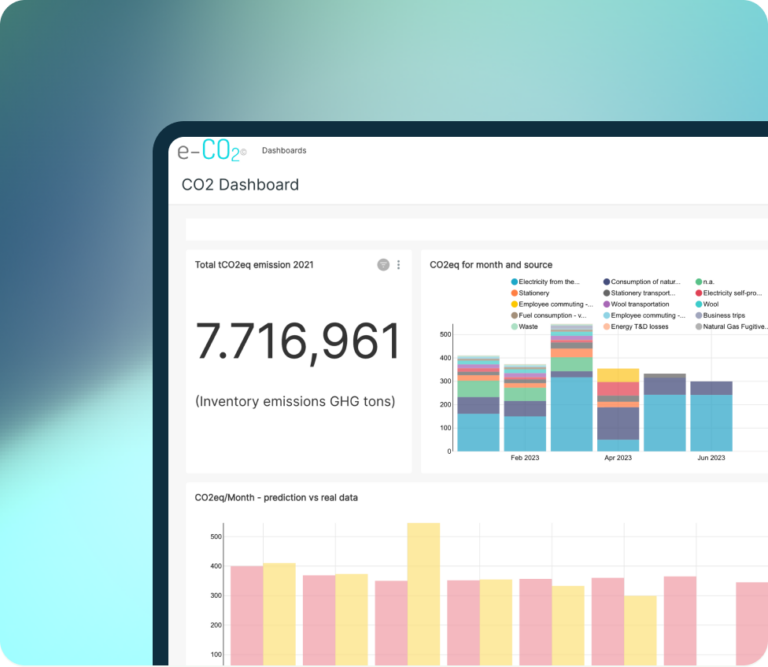
With eCO2, we help organizations:
- operationalize Double Materiality and IROs (impact, risk, opportunity)
- structure KPI governance, controls and data lineage (including value chain inputs)
- reduce duplication across frameworks
- produce reporting that is credible, readable, and audit-ready—even while standards change
Because “good simplification” doesn’t mean less sustainability. It means measurable, decision-useful sustainability.
Christian Sansoni